
Creatorton: what happens when you give creators a hackathon instead of coders
A developer format, handed to the people who make the internet interesting.
Hackathons have always belonged to engineers. A room of laptops, a deadline, a demo at the end, and a judging panel that mostly cares whether the thing compiles. It is a great format. It is also, for the last two decades, been closed to anyone who could not write software.
Creatorton keeps the format and removes the barrier. Same energy, same clock, same pitch at the end, except the builders are content creators and the coding requirement is gone entirely. You bring an idea from your own creator life. You leave with a working version of it.
Classic hackathon
- Built by developers, judged by developers
- Overnight sprints in a programming language
- Success measured in working code
- Non-technical people watch from the sidelines
Creatorton
- Built by creators, judged by operators and creators
- One evening, prompting instead of programming
- Success measured in something you would actually use
- The room is the audience, the team and the test group
What Creatorton actually is
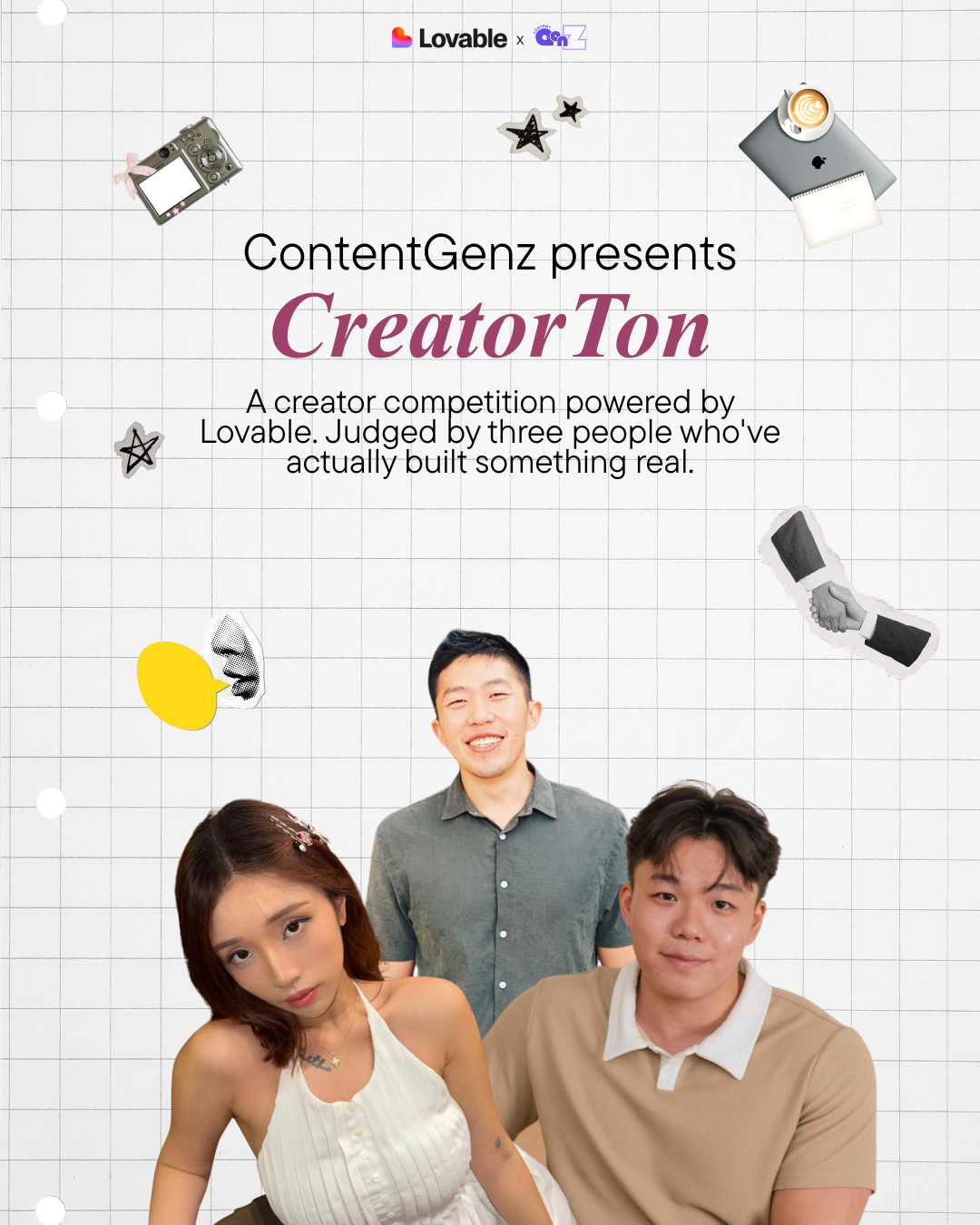
Creatorton 2026 is a one-evening creator hackathon in Singapore, hosted by ContentGenZ. It runs on Thursday, 3 September 2026, doors from 6.30pm, at 179 Ubi Ave 4, Level 2. The night opens with a short panel, moves into two build blocks separated by a vendor break, and closes with pitching, judging and prize giving before the night is over.
The prize pool is $500, alongside tool credits and partner perks. How that splits across placings is still being finalised, and we would rather say that plainly than publish a breakdown we have to walk back. Capacity is limited by the room, which is deliberate. Sixty or so people who can actually talk to each other beats a hall where nobody meets anyone.
How the no code part actually works
Lovable is the primary sponsor tool, and it is what most people in the room will build on. You type a description of the thing you want, and it produces a real, running web app. Not a mockup, not a slide. Something with a URL that a brand could open on their phone.
In practice, a build looks less like engineering and more like editing. You start rough, you look at what came out, you tell it what to change, and you keep going until it matches the thing in your head. Creators tend to be unusually good at this, because the skill being tested is describing an outcome precisely, which is the same skill behind a good brief or a good hook.
- 1
Bring a problem
A rate card you keep rewriting, a media kit stuck in a slide deck, a posting schedule living in your notes app.
- 2
Describe it
Type what it should do in normal language. Lovable turns the description into a working app you can click through.
- 3
Shape it live
Change the layout, add a page, plug in your numbers. Every edit renders in front of you, so you iterate the way you edit a video.
- 4
Pitch it
Two minutes on stage. What you made, who it is for, why it matters. Judges respond to clarity and usefulness, not technical depth.

Lovable is the primary build tool for Creatorton. Participants get access on the night, with no prior setup expected.
Who is judging
The panel is made up of people who have shipped things, not just talked about them. Gabe Chia runs The Viral Haus and builds personal brands that convert into leads. Joshua Chan founded ErgoTune and took it to an exit before moving into helping other founders. Chloe Lim creates fashion and lifestyle content and understands, from the inside, what a creator tool has to get right to be worth opening twice. More judges are still to be confirmed.
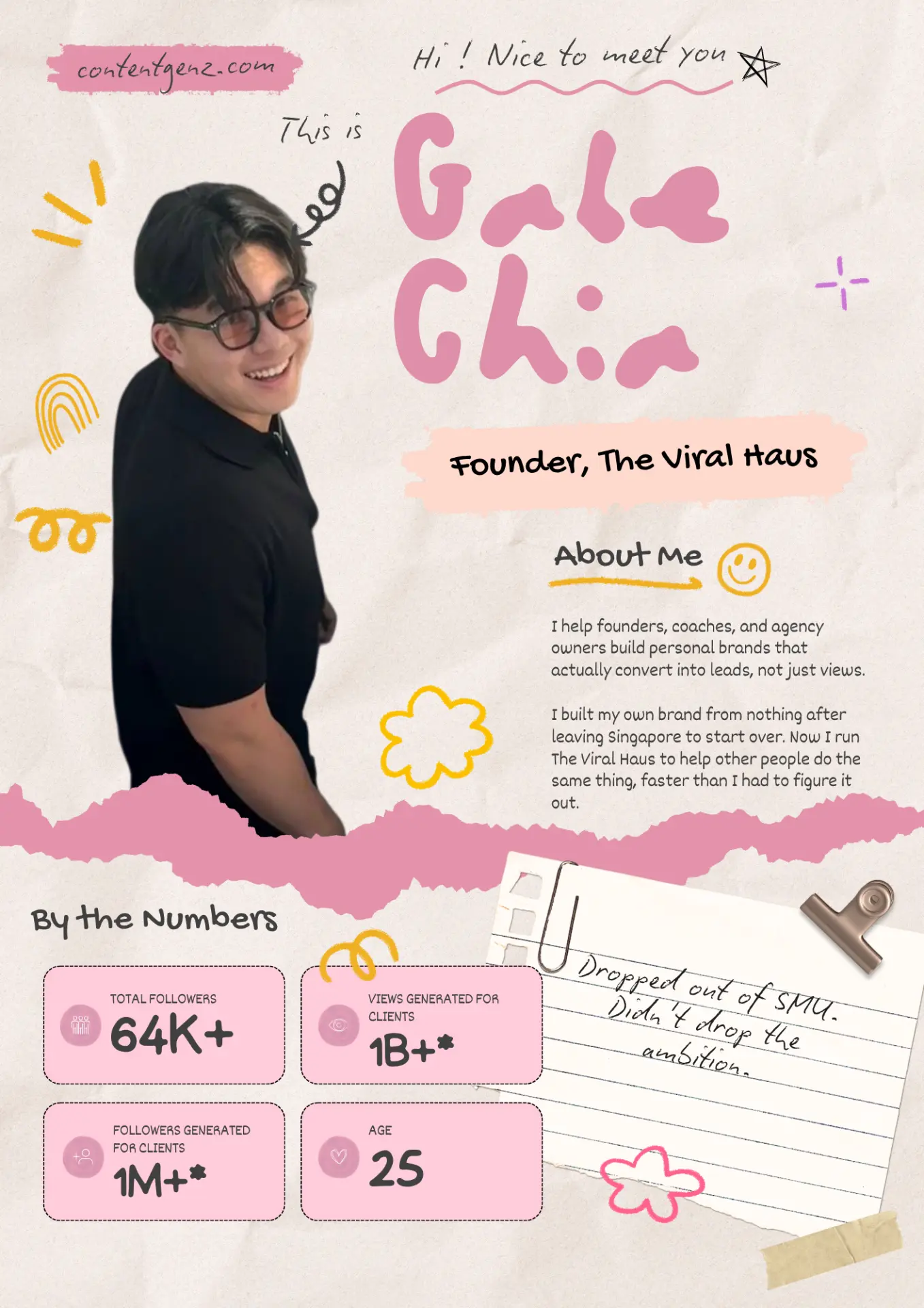
 Gabe ChiaFounder, The Viral Haus
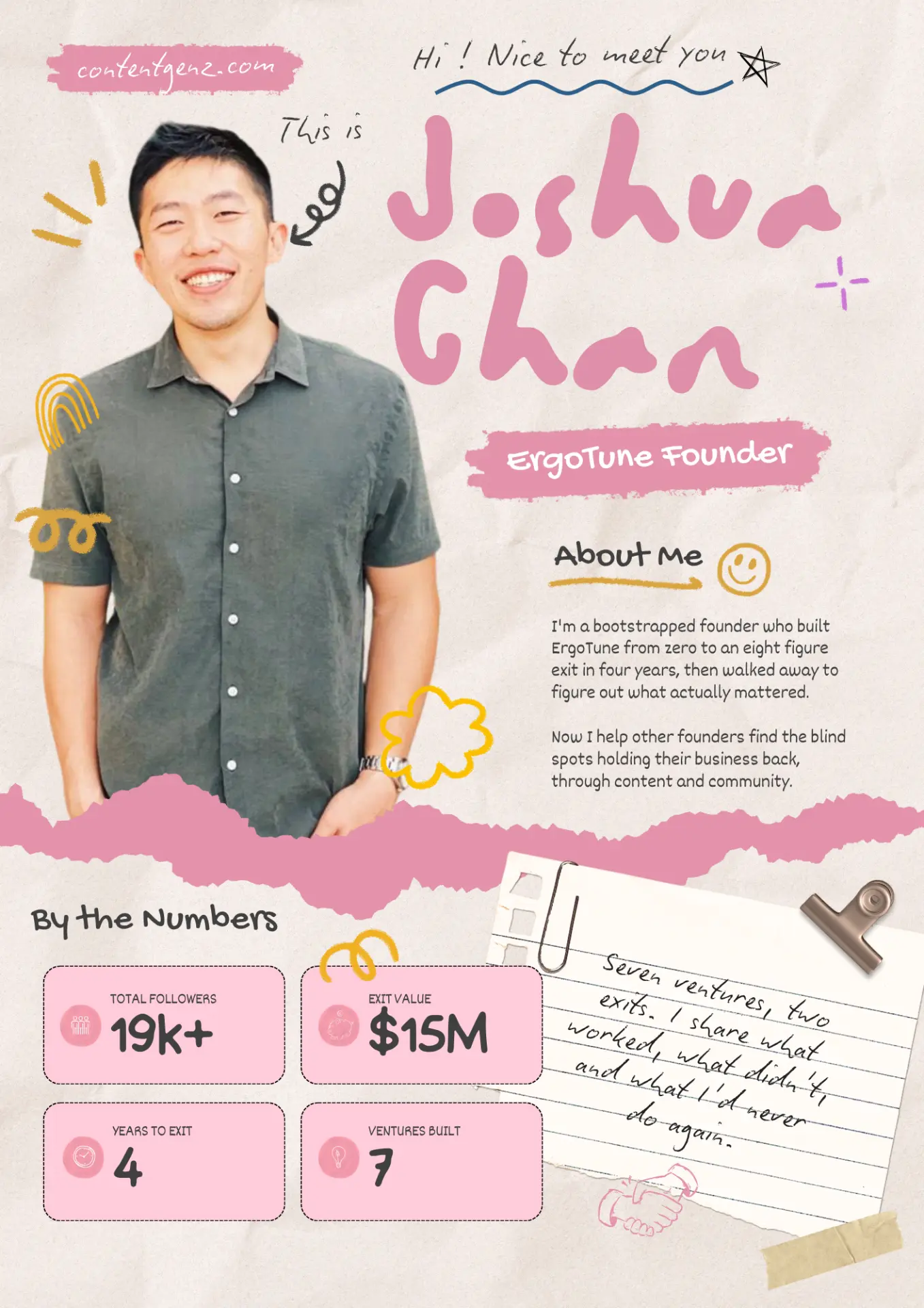
 Joshua ChanFounder, ErgoTune
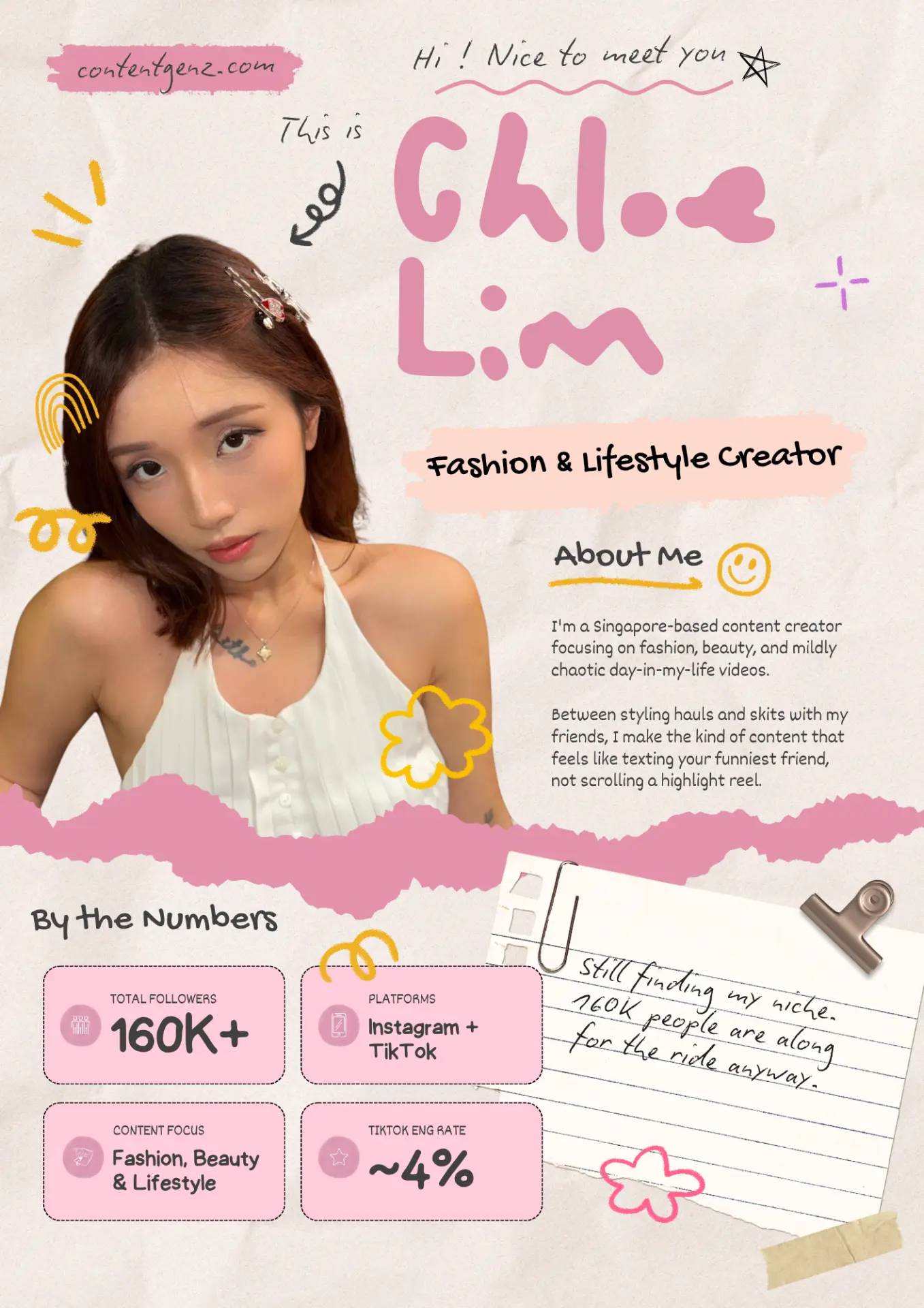
 Chloe LimFashion and lifestyle creator
Why this matters for Singapore's creator economy
Singapore's creator economy has plenty of people making excellent content and comparatively few people building the tooling around it. Rates get negotiated in DMs. Media kits live in screenshots. Reporting is a manual export at the end of a campaign. The gap is not talent, it is infrastructure, and until recently that gap could only be closed by someone who could code.
That is what makes AI tooling more than a novelty here. When the person who feels the problem can also build the fix in an evening, the pace of the whole scene changes. Creator events have historically been about networking and panels, which is useful but passive. Content creator events that end with working products in the room are a different kind of thing, and there are not many of them yet in this market.
We are not claiming one evening rewires an industry. What it does is prove to a room of sixty people that the tools are now within reach, which is usually the step that has been missing.
Creatorton FAQ
No. Creatorton is built for people who have never written a line of code. You describe what you want in plain English inside Lovable and other AI tools, and the build happens through prompting rather than programming.
If any of this sounds like your kind of evening, registration is open and it takes about a minute. No pitch deck, no portfolio review, no coding test. Bring the idea you keep meaning to get around to, and use the night to finally make it exist.
Register for Creatorton 2026